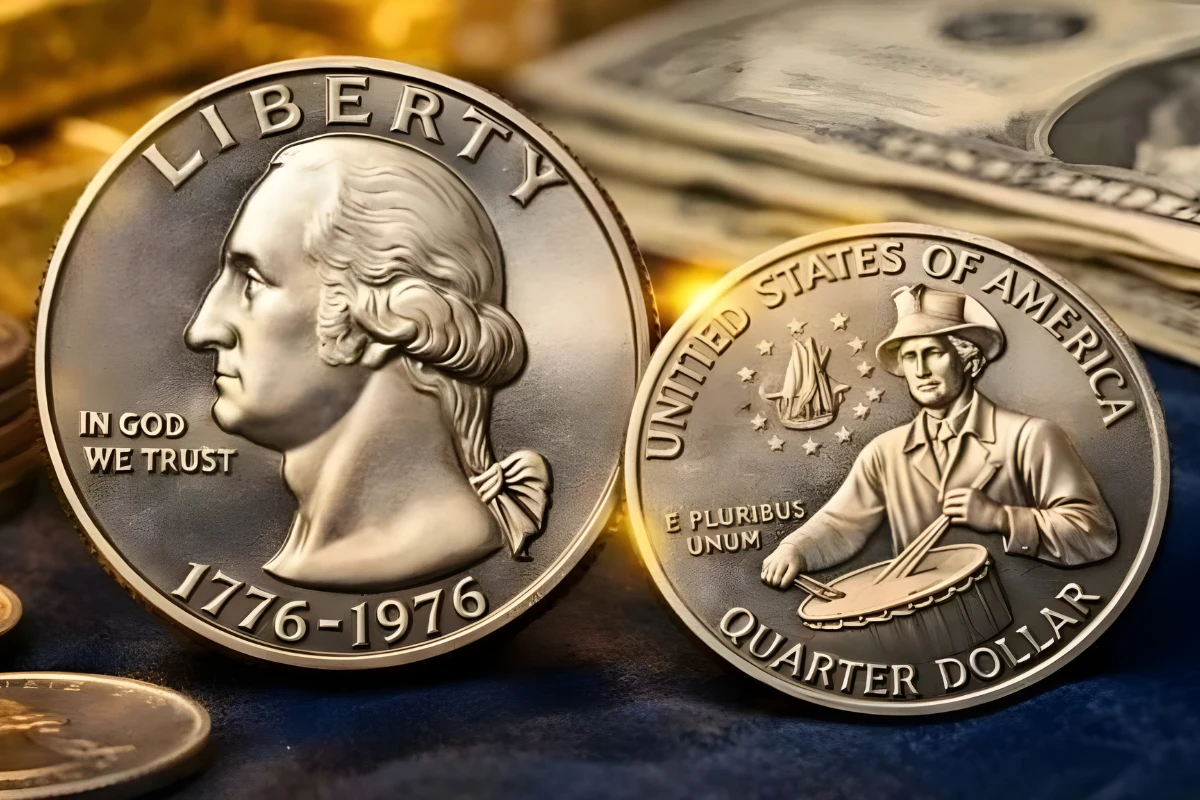
The 1976 Drummerboy Quarter, commonly known as the Bicentennial Quarter, is one of the most recognizable U.S. coins ever minted. Minted to commemorate the 200th anniversary of American independence, it features a Colonial drummer on the obverse instead of the traditional eagle. While most Bicentennial Quarters are worth only their face value, some rare varieties and mint errors can be very valuable. Some collectors claim that certain versions can fetch very high prices, sometimes as high as $550,000. To understand why a coin can reach such a high price, one must examine its rarity, condition, and minting characteristics.
Bicentennial Quarter Design
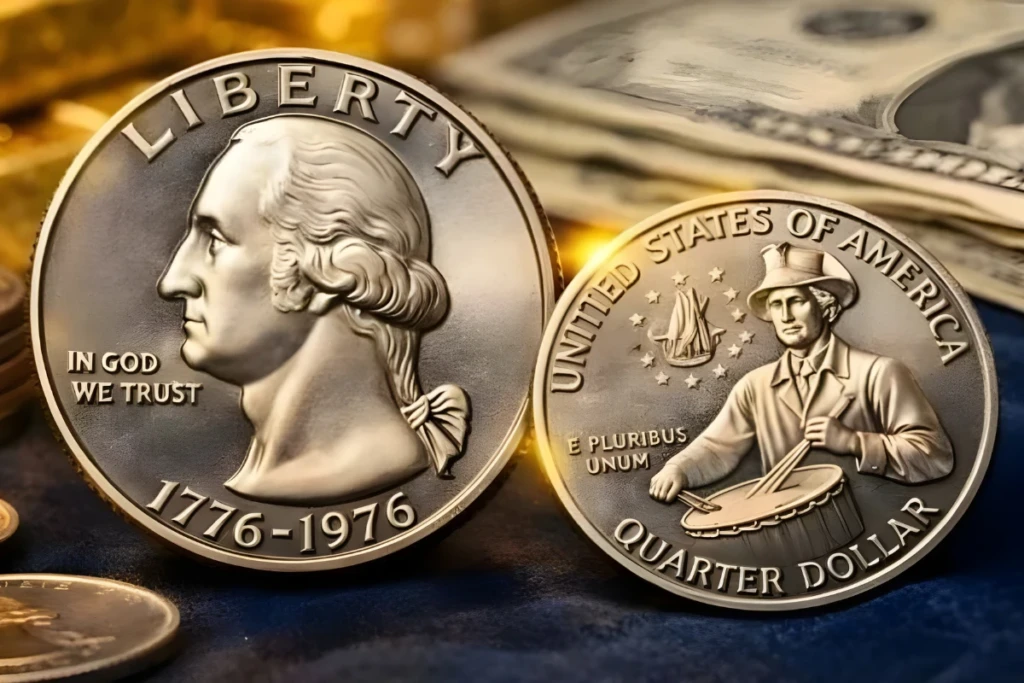
The Bicentennial Quarter was issued in 1975 and 1976 to commemorate the 200th birthday of the United States. Its previous design, designed by Jack L. Created by Ahr, it depicts a Colonial drummer holding a Victory Torch surrounded by thirteen stars. The obverse still features George Washington, but instead of a single year, the double date “1776–1976” appears. This memorable design immediately distinguishes the coin from regular quarters. Billions were produced, meaning most examples are common and widely circulated.
Rare and Precious Versions
Although millions of Bicentennial quarters exist, some rare variations are highly coveted by collectors. Coins made with 40% silver for special collector sets are more valuable than regular copper-nickel circulation coins. Some proof versions, also made for collectors, can be highly valuable if kept in good condition. The most valuable items generally carry a high degree of preservation along with rarity. When collectors hear of exorbitant prices, they are usually referring to a rare, high-grade specimen or an unusual minting error.
Precious Mint Mistakes
Mint mistakes are a major reason why Bicentennial quarters can be so valuable. Examples include double die mistakes, off-center strikes, and coins struck on the wrong metal planchet. These mistakes occur during the minting process and are usually caught quickly, resulting in fewer surviving examples. Because coins with mistakes are unusual and unique, collectors often compete fiercely to obtain them. The fewer and more significant the mistakes, the higher their potential value.
Condition and Grading
A coin’s condition is crucial in determining its market value. Professional grading services evaluate coins on a scale ranging from poor to mint state, based on wear, luster, and strike quality. A Bicentennial quarter in normal circulated condition can fetch only twenty-five cents. However, coins graded MS67 or higher can fetch significantly higher prices due to their near-perfect appearance. High-grade coins are rare because most entered circulation and were worn over time.
Identifying Rare Coins
Collectors seeking valuable Bicentennial quarters should check several important details. First, look for the mint mark, which appears near Washington’s ponytail and indicates where the coin was minted. San Francisco Mint coins may have silver versions or special proof strikes. Next, examine the coin carefully for unusual doublings, missing design elements, or off-center strikes. Using magnification and comparing it to known varieties can help identify potentially valuable examples.
Collector Market Demand
The coin collecting market significantly influences how much a rare quarter will sell for. Demand increases when collectors compete for certain high-grade or error-prone coins. When a unique specimen is discovered, auctions sometimes fetch surprisingly high prices. Media reports about coins worth millions of dollars often mention these rare auction moments. However, most Bicentennial quarters are common collectibles rather than high-value rarities.

Conclusion
The 1976 Drummer Boy quarter remains a fascinating part of American numismatic history. Although billions of dollars worth of coins were minted, and most are worth face value only, rare variations can attract considerable collector attention. Coins with mint errors, silver composition, or special grading can fetch significantly higher prices than common examples. Stories of quarters valued at $550,000 illustrate how rarity and collector demand can significantly impact a coin’s value. For collectors and enthusiasts, a careful look at Bicentennial quarters may still yield hidden treasures.