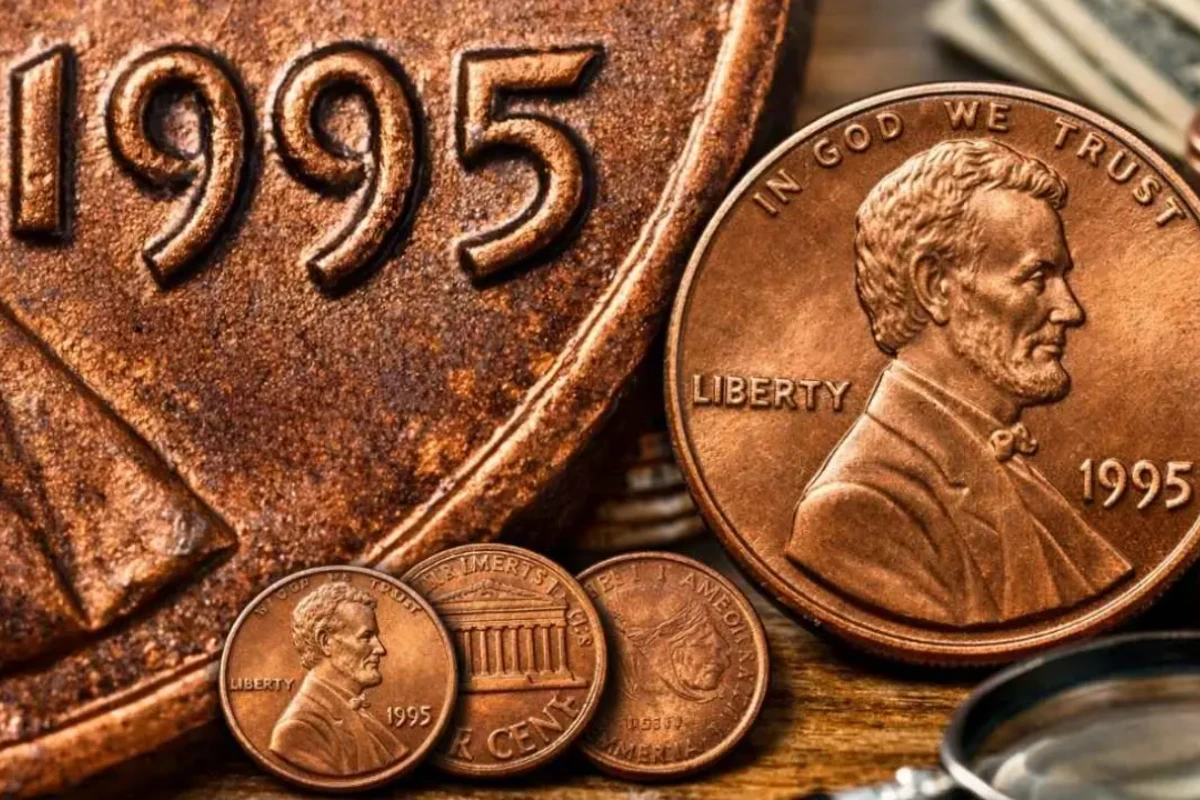
The 1995 Lincoln Penny coin was originally valued at one cent, its actual value today can vary depending on condition, mintmark, and collector demand. Understanding how value works helps explain why some 1995 pennies remain worth just one cent, while others sell for significantly higher prices in the collector market.
Historical Background of the Coin
The 1995 Lincoln Penny is part of the long-standing Lincoln Cent series, first introduced in 1909 to honor President Abraham Lincoln. Featuring Lincoln’s portrait on the obverse and the Lincoln Memorial on the reverse, this design was used from 1959 to 2008. By 1995, this coin had become one of the most widely minted coins in American history. Millions of coins were produced for circulation, which is why many examples still appear in everyday pocket money today.
Mint Production Numbers
During 1995, the United States Mint produced pennies at several locations to meet nationwide circulation demand. The Philadelphia Mint produced coins without a mint mark, while the Denver Mint used a “D” mint mark. The total production that year was very high, which means that most circulated coins still have very low collector value. However, some better-grade examples are desirable for collectors who seek well-preserved coins.
Metal Composition Information
The 1995 Lincoln penny was produced using a copper-plated zinc composition, which the U.S. Mint adopted in 1982. Each coin contains approximately 97.5 percent zinc and a thin layer of copper on the outside. This structure helps the coin retain its traditional copper color and reduce production costs. The coin weighs approximately 2.5 grams, making it lighter than solid bronze pennies minted before the 1980s.
Design Elements of the Coin
The obverse of the coin features a right-facing portrait of Abraham Lincoln, accompanied by the inscriptions “IN GOD WE TRUST,” “LIBERTY,” and the year 1995. Victor David Brenner initially designed this portrait, and it is one of the most recognizable images on U.S. coins. The reverse features the Lincoln Memorial with “UNITED STATES OF AMERICA” and “ONE CENT” in the center. If you look closely, Lincoln’s statue can actually be seen within the design.

The Impact of Circulation Condition
Most 1995 pennies found today have been in circulation for several years, which means they exhibit scratches, dull surfaces, or worn details. These circulated coins are generally worth their face value because they are so common. Collectors generally prefer coins in better condition, such as Mint State. A penny with a bright original luster and minimal marks may be more desirable than one that has been in circulation for decades.
The Impact of the Grading Scale
The grading of a coin plays a significant role in determining the value of any collectible coin. The grading scale ranges from poor condition at the lowest end to Mint State grades above MS60 for coins that have never been circulated. A 1995 penny graded MS65 or higher can attract collectors’ attention due to its excellent visual quality. Higher grades often indicate sharper design details and a smoother surface.
Differences in Mint Marks
An important feature collectors look for is the mint mark below the date on the obverse of the coin. Pennies minted in Philadelphia have no mint mark, while those minted in Denver have a small “D.” While both versions are common, collectors sometimes compare availability in higher grades. Differences in minting quality or preservation may slightly impact collector pricing.
Collector Demand Factor
The value of any coin depends to some extent on demand within the collecting community. Some collectors focus on completing a complete Lincoln Cent Date Set, which includes coins from every year and mint mark. Because the Lincoln Cent series is over a century old, collectors often seek well-preserved examples of modern coins, such as the 1995 penny, to fill a void in their collections.
Market Value Overview
Most circulated 1995 pennies are worth just one cent, but uncirculated examples can fetch a decent price for collectors, depending on their quality. Coins graded MS65 or higher sometimes sell for a few dollars, especially if they show a deeper color and fewer marks. Proof versions also exist, with a mirror-like surface specifically designed for collectors. These proof coins were minted at the San Francisco Mint and often fetch a higher price if well-preserved.
Value of a 1995 Penny
The table below shows the estimated price range commonly associated by collectors with 1995 Lincoln pennies, based on mint mark and condition.
| Coin Type | Circulated Value | Uncirculated Value | High Grade Value |
|---|---|---|---|
| 1995 (No Mint Mark) | $0.01 | $0.10 – $0.50 | $3 – $8 |
| 1995-D Penny | $0.01 | $0.10 – $0.60 | $4 – $10 |
| 1995 Proof Penny | $1 – $2 | $3 – $5 | $10+ |
These ranges reflect general collector trends rather than fixed prices. The true value of an individual coin depends largely on visual quality and professional grading.
Mistakes in Coins
Sometimes, minting errors can make a 1995 penny more interesting to collectors. Mistakes occur when something unusual occurs during the minting process, such as double letters or strikes in the wrong line. A well-known variety of this year is the 1995 Double Die Obverse. In this error, some letters appear slightly doubled, which can significantly increase the coin’s value among collectors.

The Importance of Preservation
Coins in good condition often command higher prices because they show minimal wear. Minor scratches, discoloration, or a dull surface can also reduce collector interest. The original copper color and high-gloss, shiny coin visually stand out, making it more attractive in the coin market. Therefore, preservation over time is an important factor in determining long-term value.
Long-Term Collectibility
Modern coins like the 1995 Lincoln Penny may seem commonplace today, yet they still hold a place in American numismatic history. Many collectors enjoy studying the small design details, mint variations, and production numbers. As the years pass, the number of well-preserved examples gradually decreases, which can gradually impact collectibility. Common coins also become part of the larger story of U.S. coinage.
The Legacy of Everyday Coins
The 1995 Lincoln Penny is a familiar piece of everyday American currency, used in millions of daily transactions. Although most examples are worth only one cent, this coin holds historical significance in the Lincoln Cent Series. For both collectors and the casual observer, looking at a simple penny often reveals surprising details about minting technology, design history, and the changing economy of producing U.S. coins.