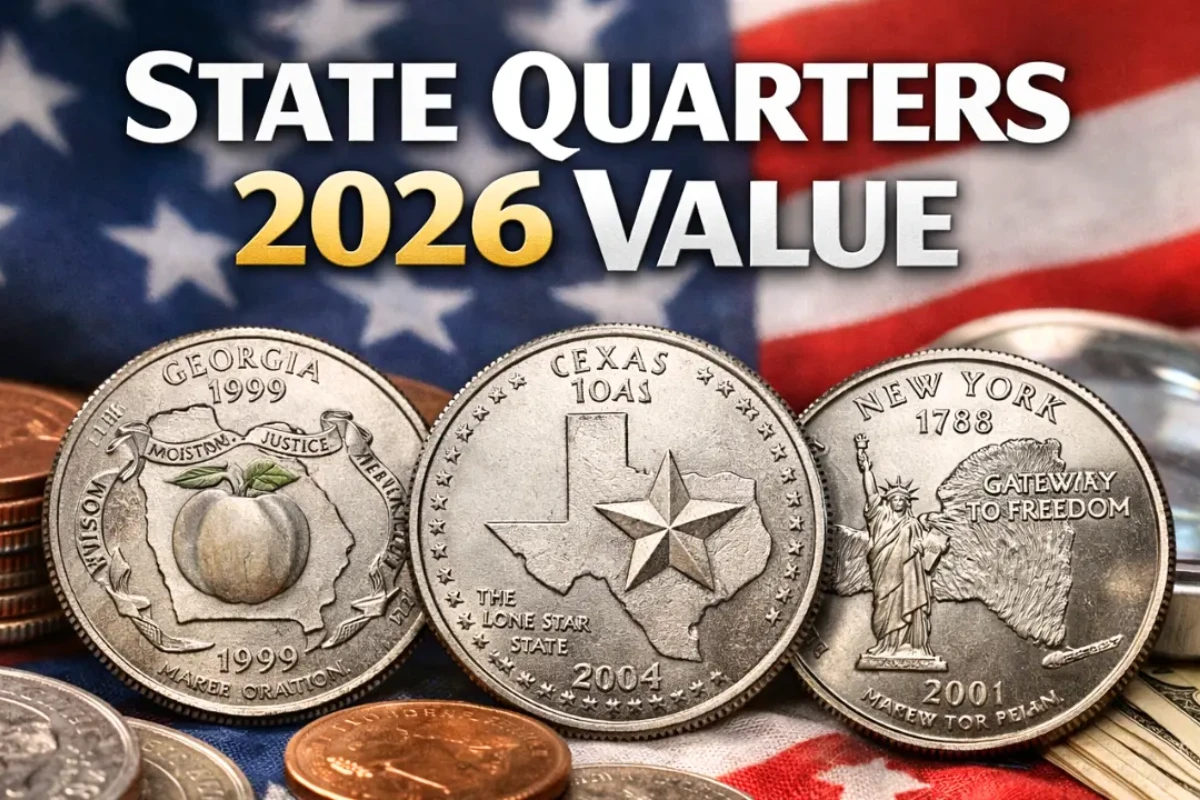
Rare State Quarters Value Guide 2026 : State quarters have quietly transformed from everyday pocket change into serious coin treasures. In 1999, the U.S. Mint launched the 50 State Quarters Program, which ran until 2008, producing billions of coins of five designs each year. Most of these quarters are worth exactly twenty-five cents, but a select few have minting errors, rare die variations, or exceptional condition, making them worth thousands or even millions of dollars. Collectors and investors around the world are paying closer attention to their coin jars than ever before. Understanding which coins hold exceptional value can literally turn your freebies into life-changing windfalls.
What Makes Quarters Rare
The rarity of State Quarters comes from a combination of minting errors, low mintage figures, and secure condition grades. The U.S. Mint operates facilities in Philadelphia, Denver, and San Francisco, and slightly different strike qualities can be found in each location. Misprinted coins—those with double dies, off-center strikes, missing clad layers, or incorrect planchet compositions—are the most valuable because they accidentally escape quality control. Coins graded MS-67 or higher by a professional grading service like PCGS or NGC command a substantial premium over coins with lower grades. The fewer specimens in a given grade or misprint, the more intense the competition among collectors.
Top 10 Rarest State Quarters
The table below shows the ten most valuable state quarters discovered by collectors in 2026, ranked by estimated market value.

| Quarter | Error/Variety | Estimated Value |
|---|---|---|
| 2000-P Maryland | Double Die Obverse | $4,600,000 |
| 1999-P Delaware | Missing Clad Layer | $3,800,000 |
| 2004-D Wisconsin | Extra Leaf High | $3,200,000 |
| 2004-D Wisconsin | Extra Leaf Low | $2,900,000 |
| 1999-P Connecticut | Off-Center Strike | $1,750,000 |
| 2000-P Virginia | Wrong Planchet | $1,500,000 |
| 2001-P Kentucky | Die Cap Error | $1,200,000 |
| 2002-P Tennessee | Doubled Die Reverse | $980,000 |
| 2003-P Maine | Broadstrike MS-67 | $640,000 |
| 1999-P New Jersey | Proof on Clad | $430,000 |
Information About the Wisconsin Extra Leaf
The 2004-D Wisconsin quarter is perhaps the most famous error coin in the entire state quarter series. During the minting process at the Denver facility, some dies were accidentally altered, resulting in quarters that featured an extra leaf on the ear of corn featured in the design. Two different varieties exist—Extra Leaf High and Extra Leaf Low—each of which commands varying valuations among major collectors. Experts debate whether these errors were caused by deliberate tampering, accidental die gouging, or a random polishing error. Regardless of origin, coins certified in top grades have fetched very high prices at major auction houses. Owning any variety in MS-66 condition or better is one of the best investments in modern American numismatics.
Grading and Certification Matter
A coin’s grade significantly determines its market value, sometimes separating a $50 coin from a similar coin worth $50,000. Professional Coin Grading Service (PCGS) and Numismatic Guaranty Company (NGC) are two of the world’s most trusted third-party grading firms. When submitting a coin for grading, collectors receive a sealed plastic slab with the official grade on the Sheldon 70-point scale. Coins graded MS-65 and above are considered gem quality, while examples of MS-67 or higher are very rare for most State Quarter issues. Never attempt to clean or polish a coin before depositing it, as artificial cleaning immediately destroys its numismatic value and results in a “details” grade that significantly reduces market appeal.

How to Find Valuable Quarters
Finding rare State Quarters doesn’t require expensive equipment or exclusive connections—just patience and an eye for trend. Start by examining a roll of quarters from your local bank, as unearthed bank rolls sometimes yield misprinted coins that have passed unnoticed through commerce. Pay close attention to the coin’s edges, checking for missing clad layers that expose the copper core beneath the rim. Carefully examine both the obverse and reverse designs under a magnifying loupe for doubling, extra elements, or misplaced strikes. Online communities, coin shows, and estate sales also offer regular opportunities to purchase rare specimens at below-market prices. Developing a systematic search significantly increases your chances of finding a valuable coin over time.
Selling and Auction Strategy
Once you’ve identified a potentially valuable State Quarter, the selling process requires strategic planning to maximize your returns. Always have a coin professionally graded before listing or consigning it, as raw, ungraded coins regularly sell for much lower prices than their certified counterparts. Major auction houses like Heritage Auctions and Stacks Bowers specialize in numismatic sales and attract wealthy collectors willing to pay top dollar for certified rarities. Setting a realistic reserve price based on recent, comparable sales data helps prevent truly rare pieces from being sold at a low price. Online marketplaces like eBay may work for lower-priced coins, but high-value pieces deserve the exposure and credibility that well-known auction venues provide.

Conclusion
Rare State Quarters represent an interesting intersection of American history, minting technology, and a serious investment opportunity. Together, the ten coins featured in this guide demonstrate how minor manufacturing errors or extreme caution can transform common currency into enormous wealth. Whether you’re a seasoned numismatist or a curious newcomer examining your remaining coins, the State Quarters series offers an easy entry point at every collecting level. Correct grading, patient searching, and smart selling strategies form the foundation of success in this rewarding hobby. With a total estimated value of over $21 million, these ten quarters prove that the next riches may already be in your coin jar.