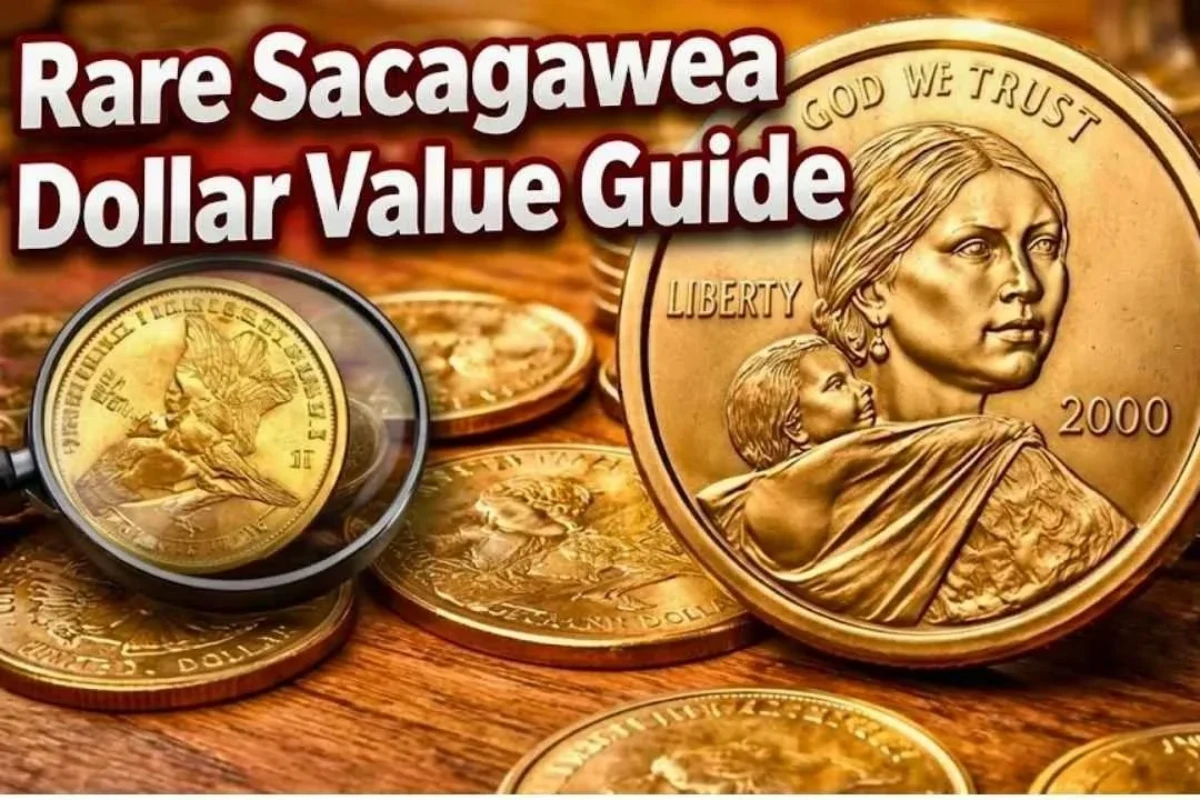
Sacagawea Dollar Value Guide 2026 : The Sacagawea dollar is one of the most recognizable and collectible coins in American numismatic history. First introduced in 2000, this gold-colored coin features the young Shoshone woman who guided the Lewis and Clark expedition across the American border. For decades, both collectors and casual holders have wondered if these coins, found in jars and drawers, are truly worth anything. In 2026, renewed interest in coin collecting has prompted more people to research how much their Sacagawea dollars are actually worth. This guide explains everything you need to know about determining the value of these coins today.
What is the Sacagawea Dollar?
The Sacagawea dollar is a United States one-dollar coin, minted since 2000, featuring Glenna Goodacre’s famous portrait of Sacagawea holding her young son, Jean-Baptiste. This coin features the lesser-known Susan B. It was designed to replace the Anthony dollar and introduce a more distinctive golden color to U.S. currency. Despite never achieving widespread circulation success, it became a staple in coin rolls and vending machine transactions. Since 2009, the reverse design has rotated annually as part of the Native American Dollar Coin Program. Each year’s unique reverse design has made this series even more interesting for collectors seeking a complete set.
Mint Marks and Meaning
Each Sacagawea dollar bears a mint mark that directly impacts its collectible value and rarity. Coins minted at the Philadelphia Mint have a “P” mark, while Denver coins have a “D” mark, and San Francisco proof versions have an “S” mark. The San Francisco Mint issues special proof and superior uncirculated coins that are not released into general circulation, making them quite rare. Collectors prefer “S” mint coins over their circulated “P” and “D” coins found in everyday transactions. Understanding mint marks is the first step toward accurately estimating the value of any Sacagawea dollar you own.

Special Dates and Rarity
Certain years of the Sacagawea dollar series stand out in terms of collector demand and market value. The 2000-P Cheerios dollar, which comes in specially packaged Cheerios cereal boxes, features a bold eagle on the obverse and is worth hundreds to thousands of dollars. The 2000-P Wounded Eagle variety, which shows a die gouge near the eagle, is another high-value error coin sought by specialists. The 2001-D coin had a lower mintage than most years, making circulated examples more desirable than average. Error coins from all years, including doubled dies and off-center strikes, command significant value regardless of the year they were minted.
Sacagawea Dollar Value Table
Below is a general value reference for common Sacagawea dollars in 2026:

| Year & Mint | Circulated Value | Uncirculated (MS65) | Proof (PR65) |
|---|---|---|---|
| 2000-P (Standard) | $1.05–$1.50 | $3–$8 | N/A |
| 2000-S Proof | N/A | N/A | $12–$20 |
| 2001-D | $1.05–$2.00 | $5–$12 | N/A |
| 2005-P | $1.05–$1.25 | $2–$5 | N/A |
| 2012-S Enhanced | N/A | $15–$30 | N/A |
| 2019-S Proof | N/A | N/A | $18–$35 |
Properly Grading Your Coin
Coin grading is a process in which the physical condition of a coin is assessed on a scale ranging from Poor (P-1) to Perfect Mint State (MS-70). A Sacagawea Dollar in circulated condition, showing wear on the cheeks and eagle’s wings, would be graded between Good and Extremely Fine. Coins that have never been in circulation retain their original luster and are graded on the Mint State scale from MS-60 to MS-70. Professional grading services like PCGS and NGC offer certified holders who protect coins and authenticate their grade for buyers and sellers. Having a key-date or high-value Sacagawea Dollar professionally graded can significantly increase its marketability and resale value.
Factors Affecting Current Price
Many real-world factors influence how much a Sacagawea dollar is worth above its base melt or face value. Strike quality matters significantly, as coins with sharp, well-defined details command higher prices than coins with weaker strikes. Attractive appearance, such as luster, color, and the absence of contact marks, play a major role in determining the value of non-circulation coins for collectors. Market trends in 2026 show increasing demand for complete Native American dollar sets, which has driven up prices for earlier, rarer dates. Storage history also matters, as coins stored in original mint packaging or protective holders retain their grade better than loose coins found mixed with other items.

Where to Sell Coins
Once you know the value of your Sacagawea dollar, choosing the right place to sell it can make a real difference in what you get. Online auction platforms attract competitive bids that can fetch prices far above guide values for rare coins. Coin dealers offer convenience and quick cash, though they typically buy at wholesale prices to ensure their profit margins. Local coin shows offer face-to-face negotiations with knowledgeable collectors who can pay closer to retail for coins they particularly desire. For high-value coins like Cheerios dollars or professional-grade specimens, specialized numismatic auction houses often achieve the strongest final sale prices.
Conclusion
The Sacagawea Dollar Series offers something for collectors of every level, whether casual hobbyists or serious numismatists. Most common-date coins are worth roughly face value, but special dates, error coins, and high-grade specimens can be truly valuable. Understanding mint marks, grading standards, and current market demand gives you a significant advantage when buying or selling. With the Native American Dollar Program releasing new designs, this series will remain active and collectible through 2026 and beyond. Taking the time to properly examine your coins can reveal hidden treasures in your collection.